Be yourself; Everyone else is already taken.
— Oscar Wilde.
This is the first post on my new blog. I’m just getting this new blog going, so stay tuned for more. Subscribe below to get notified when I post new updates.
Be yourself; Everyone else is already taken.
— Oscar Wilde.
This is the first post on my new blog. I’m just getting this new blog going, so stay tuned for more. Subscribe below to get notified when I post new updates.
It’s fast approaching the end of July, and with it the month long campaign dedicated to raising awareness about minimising the purchase of all products with plastic packaging and in particular reducing single-use plastics.
The publicity campaign may well have calmed down a tad by now, but this year, more than previous years, the message seems to have permeated further, taken a hold within communities and the ripple effect can be seen and felt if one is discerning enough to notice.
.
It’s not just those flimsy plastic bags that are getting negative press though. It’s also plastic straws and water bottles and microplastics which are floating in our waterways and oceans and being gobbled up by fish and then…yup, you guessed it, gobbled up by us!
It can all seem a bit overwhelming, too big a problem to possibly tackle all on your own. Even when we’re told there will be more plastic than fish in the sea by 2050, it’s hard to really know where to start. But small changes across an entire community will make a big impact long term. And it’s just small changes you are encouraged to make during the month of July to ‘road test’ these shifts of behaviour and perhaps even realise its not all that hard, it just takes a little getting used to.
A full milkshake experience isn’t complete without sucking it through a straw and slurping the last bits loud and proud. But for many people, it’s the last straw! Times are a-changing for the humble straw, and while many cafes and bars still automatically assume you want a straw and won’t even ask before placing one in your beverage, unless its a cute striped paper straw, give it back and let them know why. If you are partial to a straw in your beverage when out and about, either grab a packet of paper ones and keep a couple in your handbag (or man bag) or invest in stainless steel straws which can be used over and over and over (usually they come with a special brush tiny enough to clean the inside to keep them sanitary). Also ask your local cafe or smoothie joint to swap out their plastic straws for paper once they exhaust their current supply.
Bring your own tupperware or reusable plastic or glass food containers with you when you buy your meat, fish and other delicatessen treats such as cheeses, olives and cured meats. This one will take some preparation and organisation, because let’s be honest who walks around with tupperware in their handbag? But how about throwing a few of your spare reusable food containers into the boot of your car to use next time you shop?
Avoid plastic packaged foods altogether and shop at a co-op or bulk food store where you bring your own jars or fill paper bags with whatever you need. Again it takes a big of a rewiring of the brain to get used to the concept, but not only do you avoid excessive plastic packaging but you get to buy exactly the amount you need and finally have an opportunity to recycle all those glass jars you’ve kept and fill them with all manner of grains, nuts and other dry foods. Places such as The Source Bulk Foods and Naked Foods are popping up all over the place as consumers’ demand for this kind of shopping experience increases. If you can’t find a local co-op or zero waste store then aim to buy your essentials in bulk from the supermarket or purchase online to limit the packaging you go through. You can also purchase bulk amounts of shampoo, body wash and conditioner from places like Envirocare. You’ll reduce the items need to buy from the supermarket (likely saving a few pennies long term too) as well limiting your plastic consumption.
Of course price and quality will always be a deciding factor when purchasing any goods, but perhaps add to the ‘things to consider’ list what kind of packaging it is in. Could you go for the cardboard box of teabags over the plastic canister? The glass jar of coffee over the plastic one? Small changes like these will make a larger impact over time. Consumers have a huge part to play in what is available on the market, choose to support brands which are more conscious in their packaging choices and the larger less sustainable brands will eventually follow suit as the market will demand it of them.
Credit & Source – https://www.endeavour.bank/blog-news-blog-the-last-straw-how-to-reduce-single-use-plastics-2.html
Hydrte was launched in 2019 with one main goal in mind, to produce a water bottle that helped significantly reduce single-use plastic consumption, whilst being stylish & convenient.
One million single-use plastic water bottles are sold every 60 seconds worldwide.
This is a huge problem for our planet.
60% of these bottles end up in landfill or even our rivers and oceans. Shop The Hydrte® Bottle

The journey so far has been pretty crazy, We amassed 8,000+ customers in our 12 months. We have also co-branded with the likes of FIFA and Pomellato, as well as being stocked in The White Company. Shop Hydrte.com

The Hydrte bottle was designed in London, inspired by the busy lifestyle of the city itself. The shape of the Hydrte bottle is unique, practical and convenient.
Its flat slim shape was designed to offer a high-quality feel, whilst maintaining a sleek look. It comfortably fits into handbags, laptop bags, backpacks and just about anywhere else!
You really can stay hydrated whenever, wherever! Upgrade My Water Bottle

Your Hydrte order will help families around the world get access to safe water and sanitation — giving hope, health and the opportunity for a bright future. Every Hydrte order placed will provide 7 months of clean drinking water to someone in need.

Pretty bad. Americans buy 29 billion water bottles a year. For every six bottles people buy, only one is recycled. That leads to a big problem given the fact that water bottles do not biodegrade, but rather photodegrade. This means that it takes at least up to 1,000 years for every single bottle to decompose, leaking pollutants into our soil and water along the way. Yuck!
As a result, U.S. landfills are overflowing with 2 million tons of discarded water bottles. And because plastics are produced with fossil fuels, not only does that make them an environmental hazard, but also an enormous waste of valuable resources.
Here are just 15 of the most dangerous ways water bottled is polluting the earth, one bottle of water at a time, as well as six things you can do about plastic water bottle pollution.

People in the U.S. open 1,000 bottles of water every second and put 60 million plastic water bottles in the trash each year.

80 percent of plastic water bottles end up in landfills. It takes up to 1,000 years for every single bottle to decompose.
Toss your plastic bottled water habit for good! A cultural shift in hydrate water bottles can change the way plastic water bottles affect our environment.
Break your bottled water habit by filling your cabinet with 100% BPA-free, stainless steel water bottles that will not only help you improve the health of the environment, but will also be safer and better for your own health as well.
About Us :
The Hydrte bottle was designed in London, inspired by the busy lifestyle of the city itself. The shape of the Hydrte bottle is unique, practical and convenient.
Its flat slim shape was designed to offer a high-quality feel, whilst maintaining a sleek look. It comfortably fits into handbags, laptop bags, backpacks and just about anywhere else!
Hydrte was launched in 2019 with one main goal in mind, to produce a water bottle that helped significantly reduce single-use plastic consumption, whilst being stylish & convenient.One million single-use plastic water bottles are sold every 60 seconds worldwide
The journey so far has been pretty crazy and we amassed over 8,000+ customers in just 12 months. We have also co-branded with the likes of FIFA and Pomellato, as well as being stocked in The White Company.
Credit and source:
Plastic is one of the most persistent pollutants on Earth. It’s made to last – and it does, often for 400 years or more. And at every step in its lifecycle, even long after it has been discarded, plastic creates greenhouse gas emissions that are contributing to the warming of our world.
A report by the Center for International Environmental Law, released in May, concluded that the impact of plastic production on the world’s climate this year will equate to the output of 189 coal-fired power stations. By 2050, when plastic production is expected to have tripled, it will be responsible for up to 13% of our planet’s total carbon budget – on a par with what 615 power stations emit.
Almost all plastic is derived from materials (like ethylene and propylene) made from fossil fuels (mostly oil and gas). The process of extracting and transporting those fuels, then manufacturing plastic creates billions of tonnes of greenhouse gases. For example, 4% of the world’s annual petroleum production is diverted to making plastic, and another 4% gets burned in the refining process.

But how we manage all the plastic that then goes into circulation is equally troubling. Of the almost 3 million tonnes of plastic that Australia produces each year, 95% is discarded after a single use. Less than 12% is recycled, which leaves a staggering amount to be disposed of – in landfills or incinerated.
We used to rely on countries like China, Myanmar and Cambodia to handle our waste plastic. It was convenient to bale it up and ship it offshore for someone else to deal with.
However, the poorly-regulated incineration in those developing nations posed considerable threats to human health and the environment. Globally, in this year alone, researchers estimate that the production and incineration of plastic will pump more than 850 million tonnes of greenhouse gases into the atmosphere. By 2050, those emissions could rise to 2.8 billion tonnes.
Alarmingly, at least 8 million tonnes of discarded plastic also enters our oceans each year, and plastic pollution at sea is on course to double by 2030. Plastic has even been found in the deepest place on Earth – in the Mariana Trench, nearly 11 kilometers below sea level.
In our oceans, which provide the largest natural carbon sink for greenhouse gases, plastic leaves a deadly legacy. It directly chokes and smothers a host of marine animals and habitats and can take hundreds of years to break down.
As it does, sunlight and heat cause the plastic to release powerful greenhouse gases, leading to an alarming feedback loop. As our climate changes, the planet gets hotter, the plastic breaks down into more methane and ethylene, increasing the rate of climate change, and so perpetuating the cycle.
Credit : https://www.wwf.org.au/news/blogs/plastic-waste-and-climate-change-whats-the-connection#gs.4g1b0z
Hydrte was launched in 2019 with one main goal in mind, to produce a water bottle that helped significantly reduce single-use plastic consumption, whilst being stylish & convenient.
One million single-use plastic water bottles are sold every 60 seconds worldwide.
This is a huge problem for our planet.
60% of these bottles end up in landfill or even our rivers and oceans.
The Hydrte bottle was designed in London, inspired by the busy lifestyle of the city itself. The shape of the Hydrte bottle is unique, practical and convenient.

Recycling plastic is a process that involves the conversion of waste plastic into useful materials. The process includes collecting the recyclable plastics, sorting them according to their respective polymers, and then melting them down into pellets that can be used to make items such as plastic cups, chairs, tables, and polythene bags. Recycling of plastics has been done since the 1970s. The practice is encouraged to protect the environment. Below are the recyclable plastics.
PET is widely used for soft drink bottles as it makes an excellent moisture barrier. When recycling PETE, the plastic containers are sorted by color. They are then washed and flaked. As the process continues, non-PETE components are eliminated. After flaking, the clean PETE is dried up. The recycled plastic are passed through several treatment processes that would make them safe to be used in food handling. The treatment processes include melt filtering and pelletizing. One of the most popular uses of a recycled PET is manufacturing fabrics for the clothing and textiles industries. The fabrics are produced when the recycled flake is spun through yarn and thread. Due to the irritation, the fabric may cause, the fabric is used to make clothes do not in direct contact with the skin such as jackets and coats. Besides, they are used to making containers such as bottles and food tins.
FPR MORE, VISIT AT :
https://www.worldatlas.com/articles/what-types-of-plastics-are-recyclable.html
Hydrte was launched in 2019 with one main goal in mind, to produce a water bottle that helped significantly reduce single-use plastic consumption, whilst being stylish & convenient.
One million single-use plastic water bottles are sold every 60 seconds worldwide.
This is a huge problem for our planet.
60% of these bottles end up in landfill or even our rivers and oceans.
The Hydrte bottle was designed in London, inspired by the busy lifestyle of the city itself. The shape of the Hydrte bottle is unique, practical and convenient.
Eight million tons of plastic winds up into the world’s oceans every year, much of that accumulating in the Great Pacific Garbage Patch. That 80,000 tons of fishing net, bottles, and other trash has more pieces of plastic than there are stars in the Milky Way Galaxy. And it’s only getting bigger.
Plastic is a massive problem that we as humans face and have subjected upon the other beings we share this planet with. In the middle of the ocean lies the Giant Pacific Garbage Patch that shows us just how much this problem has gotten out of hand. Here are some comparisons on how massive the Giant Pacific Garbage Patch is. Following is a transcript of the video. The world produces enough plastic each year to build 50 Pyramids of Giza. That’s over 350 million tons of candy wrappers, PVC pipes, and synthetic t-shirts. While most of it ends up in landfills 8 million tons wind up in our oceans each year. Where most finds its way into massive garbage patches around the world. And the biggest of them all is called the Great Pacific Garbage Patch. How Big The Great Pacific Garbage Patch Really Is. If you picked up each piece of plastic in the Great Pacific Garbage Patch you’d carry away about 1.8 trillion individual pieces. That’s ten times more than there are stars in our Milky Way Galaxy. And it would weigh a whopping 80,000 tons. Equivalent to the weight of three Statues of Liberty. Half of the entire patch is made of plastic fishing nets, lines, and ropes, which come from intense fishing activity near the area. The other half is mostly hard plastics and films, like water bottles and plastic wrap. But don’t let the name “Great Pacific Garbage Patch” fool you. It doesn’t look like a giant mountain of trash at all. It’s actually scattered over a region of ocean that’s twice the size of Texas, according to some estimates. So if you wanted to pick up every piece of plastic, it would take you 121 days at a walking pace of 5 km/hr to cover the entire area. Though in reality, there’s no true end since the garbage patch is constantly ebbing and flowing with the ocean currents. But let’s pretend you could scoop it all up into one place. There’d be enough plastic to fill 100 Boeing 747 planes! And the patch is only getting bigger. It’s been growing exponentially larger for nearly 70 years. Partly because once the plastic is there it’ll stick around for centuries. Those plastic fishing lines, for example, will take 600 years to break down.
CREDIT : Business Insider
Hydrte was launched in 2019 with one main goal in mind, to produce a water bottle that helped significantly reduce single-use plastic consumption, whilst being stylish & convenient.
One million single-use plastic water bottles are sold every 60 seconds worldwide.
This is a huge problem for our planet.
60% of these bottles end up in landfill or even our rivers and oceans.
The Hydrte bottle was designed in London, inspired by the busy lifestyle of the city itself. The shape of the Hydrte bottle is unique, practical and convenient.
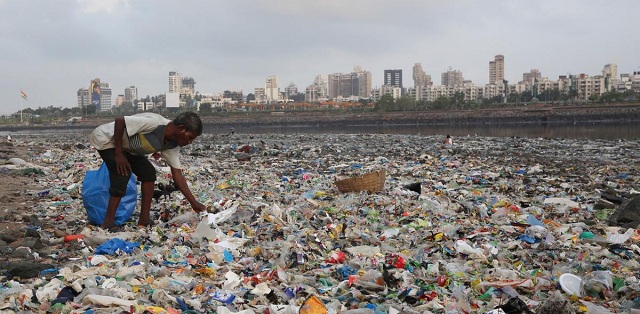
Plastic pollution is a major problem for all of us.
We have already discussed how critical is pollution from plastics.
Plastic pollution is the accumulation of plastic objects and particles (e.g. plastic bottles, bags and microbeads) in the Earth’s environment that adversely affects wildlife, wildlife habitat, and humans. Plastics that act as pollutants are categorized into micro-, meso-, or macro debris, based on size.
Here are few things why plastic should be banned :-
One of the biggest threats about plastic bags is that they threaten the environment. Plastic bags pollute the land and water, since they are lightweight, plastic materials can travel long distances by wind and water. Besides, these material bags are made from non-renewable resources. The majority of plastic bags is made of polypropylene, a material derived from petroleum and natural gas. Both of them are non-renewable fossil fuel-based resources, which contribute to global climate change.
It is said that the production of plastic material are very energy intensive. In order to produce nine plastic bags, it takes the equivalent energy to drive a car one kilometer (more than 0.5 miles). Using these resources to make plastic bags is not advisable since the life of plastic bag is just about 12 minutes. Plastic bags are not easy to recycle
Most of the plastics are not recyclable. Though some kinds of plastic bags can be recyclable, many done possess the technology or the plants to recycle them. According to various estimates, the actual recycling rate for plastic bags is about 5- 6 percent.
Since plastic bags are not recyclable, they end up in the oceans. While they reach, they break up into tiny little pieces and are consumed by wildlife. It is estimated that 46,000-1,000,000 plastic fragments floating within every square mile of the world’s oceans. Due to their size, they are often mistaken for food by animals, birds, and marine life like fish, whales and sea turtles. Thereby congesting their digestive system lead to health issues such as infections or even death by suffocation. Many animals also get entangled or trapped.
Though recycling is the best option for plastic, methodology and systematization for recycling is slow. While the production model of plastic is very huge and uncontrollable, the numbers of recycling plants are very less. This vast gap must be closed. According to an international survey, around 600 billion plastic bags are used every year and, because of their in disposable quality, many are swept into rivers or drains not just clogging but eventually ending up in the ocean. This makes plastic bags among the top 10 items of debris found in oceans and coastlines. So increasing the number of recycling plants in the only option for renewed used on plastic. Besides, plastic ban forces the customer to buy the recyclable plastic bags and reuse of disposable bags. This can also encourage reuse of the bags. Moreover, such a ban could be complemented by ensuring that retail shop keeper and big shopping complexes to team up with plastic recycling firms and set up even collection points for the bags which no longer be reused. Finally, government should educate the public and trade bodies to achieve the benefits of the ban. Since long term benefits of plastic bag ban use will benefit the economy and also save taxpayer money can lead to plastic bag cleanup.
Hydrte was launched in 2019 with one main goal in mind, to produce a water bottle that helped significantly reduce single-use plastic consumption, whilst being stylish & convenient.
One million single-use plastic water bottles are sold every 60 seconds worldwide.
This is a huge problem for our planet.
60% of these bottles end up in landfill or even our rivers and oceans.
The Hydrte bottle was designed in London, inspired by the busy lifestyle of the city itself. The shape of the Hydrte bottle is unique, practical and convenient.
You shouldn’t have to think twice about bringing water. That’s why we reimagined the humble water bottle to always fit – into your bag and life.
Memobottle convenient paper shaped design allows it to sit flat against laptops, books and anything else you might carry. Whether you’re packing for work, play or travel, you’ll find space you never knew existed.

We know that being eco-friendly is important to you, but it isn’t always easy to change old habits.
Due to the superior performance and style of the hydrte bottle you’ll never want to be without it, meaning you’ll considerably reduce or stop your reliance on single use bottles — We promise, you will never look back!
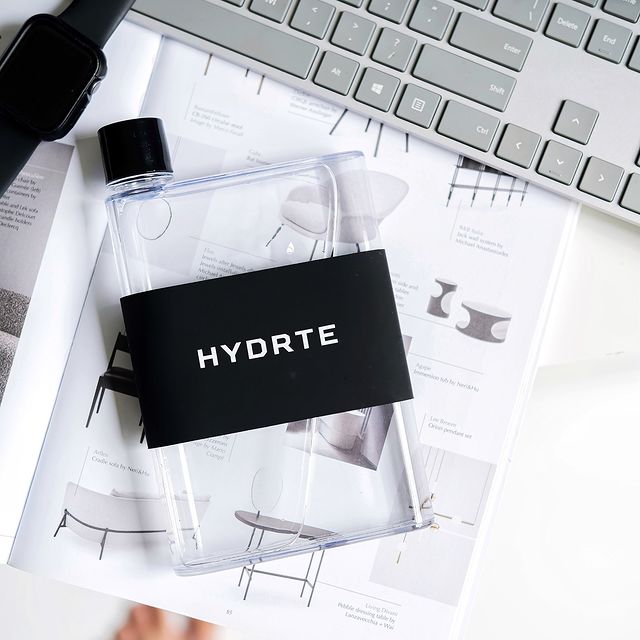

Hydrte was launched in 2019 with one main goal in mind, to produce a water bottle that helped significantly reduce single-use plastic consumption, whilst being stylish & convenient.
One million single-use plastic water bottles are sold every 60 seconds worldwide.
This is a huge problem for our planet.
60% of these bottles end up in landfill or even our rivers and oceans.
The Hydrte bottle was designed in London, inspired by the busy lifestyle of the city itself. The shape of the Hydrte bottle is unique, practical and convenient.
Its flat slim shape was designed to offer a high-quality feel, whilst maintaining a sleek look. It comfortably fits into handbags, laptop bags, backpacks and just about anywhere else!
You really can stay hydrated whenever, wherever!
For the recommended daily amount of hydration, use tap water and this reusable bottle instead of buying bottled drinks, you could save an average of around £800/$1,000+ per year.
It’s time to stay hydrated in style
Tags :
Plastic is one of the most versatile materials of our modern age. And yet the popularity of plastic is the problem. We use 20 times more plastic now than we did 50 years ago and masses of this material is finding its way into the landfill to spend hundreds of years taking up space.
Plastic pollution is the accumulation of plastic objects and particles (e.g. plastic bottles, bags and microbeads) in the Earth’s environment that adversely affects wildlife, wildlife habitat, and humans. Plastics that act as pollutants are categorized into micro-, meso-, or macro debris, based on size.

What is the Process of Recycling Plastic?
With countries all over the world under pressure to create a more sustainable future and populations more aware of the need to reduce and reuse, plastic recycling is carried out on a larger scale than ever before. The process involves the following:

Recycling plastic can mean good news for our environment and the future of our planet:
Recycling plastic can mean good news for our environment and the future of our planet:
Hydrte was launched in 2019 with one main goal in mind, to produce a water bottle that helped significantly reduce single-use plastic consumption, whilst being stylish & convenient.
One million single-use plastic water bottles are sold every 60 seconds worldwide.
This is a huge problem for our planet.
60% of these bottles end up in landfill or even our rivers and oceans.
The Hydrte bottle was designed in London, inspired by the busy lifestyle of the city itself. The shape of the Hydrte bottle is unique, practical and convenient.
Its flat slim shape was designed to offer a high-quality feel, whilst maintaining a sleek look. It comfortably fits into handbags, laptop bags, backpacks and just about anywhere else!
You really can stay hydrated whenever, wherever!
For the recommended daily amount of hydration, use tap water and this reusable bottle instead of buying bottled drinks, you could save an average of around £800/$1,000+ per year.
It’s time to stay hydrated in style
Plastic pollution is the accumulation of plastic objects and particles (e.g. plastic bottles, bags and microbeads) in the Earth’s environment that adversely affects wildlife, wildlife habitat, and humans. Plastics that act as pollutants are categorized into micro-, meso-, or macro debris, based on size.
• Recycling is a process in which waste materials are treated in a way that they can be used again. • Recycling is a key component of modern waste management and is the third component of the “Reduce, Reuse, Recycle” waste hierarchy. • Recyclable materials include many kinds of glass, paper, metal, plastic, textiles, and electronics. • Materials to be recycled are either brought to a collection center or picked up from the curbside, then sorted, cleaned, and reprocessed into new materials bound for manufacturing.
As per a recent report by Assocham-Ckinetics, India is the fifth largest e-waste producer and its electronics-waste generation is expected to yearly develop at 30% to contact 5.2 million metric tons (MT) per annum by 2020 as against the present level of 1.8 million metric tons. Hence you can see huge opportunities in e-waste recycling business.
The recycling of e-waste is both ecologically desirable and necessary. It promotes reuse of recoverable materials, thereby reducing their rate of extraction. However, resource recovery from e-waste involves convoluted chemical processes with potentially hazardous by-products, so the regulation of e-waste recycling activities is imperative.
1)Processes Of Recycling : Collection The first step required for recycling is collecting recyclable materials from communities. Families who recycle items such as paper, bottles and cans, place the items in recycling collection bins. These bins usually have the recycling symbol on them.Processing : The step involves processing the recyclable materials. This includes sorting the materials into groups, cleaning them and getting them ready to be sold to manufacturers who will turn the materials into new products.
2)Manufacturing : Manufacturing is an important step in the recycling process. Many items you may see every day are made from recycled materials. Newspapers, paper towels, office paper, plastic bottles and aluminum cans are not only made of recycled materials, but they can also be recycled again.
3) Purchasing : The last step, but certainly not the least, involves the purchasing of recycled products. When consumers purchase products that have been made with post consumer material the recycling process has been completed and can then be repeated. If you have the choice to purchase a product made from recycled materials, instead of one that was not, what do you think you should do? It takes education and awareness to remember to recycle and purchase recycled products.
Hydrte was launched in 2019 with one main goal in mind, to produce a water bottle that helped significantly reduce single-use plastic consumption, whilst being stylish & convenient.
One million single-use plastic water bottles are sold every 60 seconds worldwide.
This is a huge problem for our planet.
60% of these bottles end up in landfill or even our rivers and oceans.
The Hydrte bottle was designed in London, inspired by the busy lifestyle of the city itself. The shape of the Hydrte bottle is unique, practical and convenient.
Its flat slim shape was designed to offer a high-quality feel, whilst maintaining a sleek look. It comfortably fits into handbags, laptop bags, backpacks and just about anywhere else!
You really can stay hydrated whenever, wherever!
For the recommended daily amount of hydration, use tap water and this reusable bottle instead of buying bottled drinks, you could save an average of around £800/$1,000+ per year.
It’s time to stay hydrated in style
Tags :
Plastics recycling is failing, and the plastics industry is betting big on a technology called chemical recycling to save it. This tech can supposedly convert any type of used plastic into plastic that’s as good as new. But skepticism abounds.
The recycling of e-waste is both ecologically desirable and necessary. It promotes reuse of recoverable materials, thereby reducing their rate of extraction. However, resource recovery from e-waste involves convoluted chemical processes with potentially hazardous by-products, so the regulation of e-waste recycling activities is imperative.
As per a recent report by Assocham-Ckinetics, India is the fifth largest e-waste producer and its electronics-waste generation is expected to yearly develop at 30% to contact 5.2 million metric tons (MT) per annum by 2020 as against the present level of 1.8 million metric tons. Hence you can see huge opportunities in e-waste recycling business.
Several research projects are undertaken to find ways to fight challenges brought about by mass consumer plastic uses. Resultantly, the plastic recycling market has become a flourishing space and witnesses a continual rise. According to Market Research Future (MRFR), the global plastic recycling market is expected to expand at approximately 5.82% CAGR during the assessment period (2019 to 2028).
This is a serious concern as plastics are dangerous to our ecosystem.
Plastic is a threat to the environment, but it’s the largest source of a circular economy if recycled.
ABOUT US-Hydrte is a sleek & convenient solution to a BIG problem in our world right now.That problem is Single-use plastic bottles. Humans are purchasing 1,000,000+ single-use bottles every 60 seconds. Only 23% of that is being recycled. The hydrte bottle has been designed to offer a premium feel and has a convenient flat shape. With a capacity of 350ml it is the perfect everyday water bottle.

 Hydrte Water Bottles